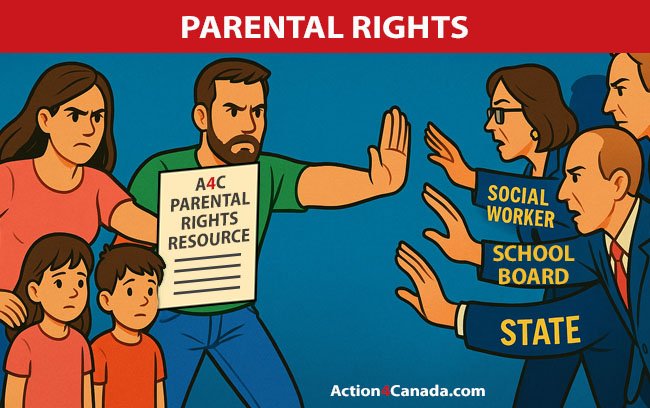
Family life is a dynamic, ever-evolving ecosystem, constantly reshaped by cultural shifts, economic pressures, and generational perspectives. At its heart lies the intricate dance of Family Life & Parental Scrutiny—both the internal gaze of parents guiding their children and the external lens of society, weighing when and how to intervene. It's a landscape where authority isn't always overt, and independence often comes with an emotional price tag, pushing us to rethink what it truly means to raise a child in the 21st century.
This guide delves into the fascinating shifts in how parental authority is perceived and exercised across generations, drawing insights from recent research. We'll also examine public attitudes towards state intervention in child protection, revealing a surprising consensus on when society deems it necessary to step in. Understanding these two facets is crucial for parents, caregivers, and policymakers alike, offering a roadmap to building resilient families within a supportive community framework.
At a Glance: Key Takeaways
- Parental Authority Has Evolved: From implicit, positional authority in older generations to more negotiated, and ultimately, "emotional" authority in younger generations.
- Democracy's Paradox: While families have become more democratic, for the youngest generation, these norms can paradoxically reinforce parental influence through emotional bonds.
- Hidden Power Dynamics Persist: Financial dependency often masks underlying power imbalances, even in seemingly "friend-like" parent-child relationships.
- Strong Public Support for Intervention: Most citizens across European countries support state intervention in child protection scenarios, challenging assumptions about public resistance.
- Problem Type Matters: Public support for intervention is highest when the parental problem is perceived as controllable (e.g., substance abuse) and decreases for less controllable issues (e.g., learning disabilities).
- Institutional Context Influences Views: Countries with "Child's Rights" protective systems tend to show greater public support for interventions.
The Evolving Landscape of Family Life & Parental Scrutiny
For centuries, the structure of family life and the exercise of parental authority were often taken for granted. Parents commanded, children obeyed, and the legitimacy of that power rarely came into question. However, modern society, with its emphasis on individual rights, open communication, and democratic ideals, has profoundly reshaped these traditional dynamics. Today, Family Life & Parental Scrutiny encompasses not just the day-to-day decisions parents make, but also the societal expectations, ethical considerations, and legal frameworks that govern child-rearing.
This complexity creates a unique tension. On one hand, parents strive to foster independence and critical thinking in their children, often embracing more egalitarian family structures. On the other hand, society maintains a vested interest in the well-being of its youngest members, establishing boundaries for parental freedom and mechanisms for intervention when a child's safety is at risk. Navigating this intricate balance requires understanding both the internal shifts within family authority and the external pressures of communal responsibility.
Authority: It's Not What It Used to Be (and Never Really Was Simple)
When we talk about parental authority, it's easy to picture a stern command or a strict rule. But authority is far more nuanced, encompassing both the power to get someone to do something and the legitimacy for that power to be accepted. New research from Norway, peering into the experiences of three distinct generations, reveals just how profoundly these dimensions of authority have transformed.
This study, titled "Doing authority": Stories of parental authority across three generations, offers a compelling narrative of how power dynamics and legitimacy have shifted. It compared the perspectives of grandparents (born 1933–1945), parents (born 1963–1970), and their adolescent children (born 1992–1993), providing a unique intergenerational lens on Family Life & Parental Scrutiny.
Grandparents' Era: The Silent Power of Position (Born 1933–1945)
For the oldest generation, authority was largely implicit, a naturalized aspect of family roles. Children described a relationship characterized by high respect and obedience, with few overt conflicts. Parental authority was "positional," meaning it stemmed from the parents' inherent status as providers and heads of the household.
Legitimacy, in this context, wasn't something earned through negotiation; it was bestowed by the very act of competence, the ability to provide for the family, and to maintain a functioning home. Disobedience, while perhaps frowned upon, didn't fundamentally question or delegitimize the parents' authority. It was simply understood that parents knew best, and their decisions were final. This generation experienced a form of Family Life & Parental Scrutiny that was primarily internal and absolute.
Parents' Era: The Rise of Negotiation and Recognition (Born 1963–1970)
The middle generation, reflecting on their own parents and their approach to child-rearing, described a notable shift. Their narratives featured more explicit conflicts, negotiations, and arguments. This wasn't necessarily a sign of breakdown but rather an indication of a growing reflexivity—a sense that parental decisions could and should be discussed. Conflict itself was often seen as a normal developmental phase or even a sign of closeness, allowing children to express their individuality.
For this generation, the legitimacy of parental authority began to revolve less around hierarchical roles and more around the parents' ability to recognize and respect them as unique individuals. They desired "internal structure"—engaged parenting that explained reasoning and fostered understanding—over simply "external boundaries" imposed without discussion. This marked a move towards a more dialogic form of Family Life & Parental Scrutiny, where legitimacy was co-constructed.
Children's Era: Friend-like Bonds, Emotional Authority, and Hidden Power (Born 1992–1993)
The youngest generation's perspective reveals the most striking evolution. They consistently described emotionally close, "friend-like" relationships with their parents, characterized by "flat structures" and frequent use of humor to diffuse traditional hierarchical tensions. They explicitly sought to avoid overt parental authority, valuing autonomy and mutual respect.
Here lies the paradox: while these democratic family norms have increased, the study suggests they often serve parental authority rather than challenge it. This generation's strong emotional bonds with parents created a new form of "emotional authority." Parental influence was legitimized not by position or even explicit negotiation, but by respecting parents' feelings—the desire not to hurt them, for instance. This subtle dynamic often masked the underlying power imbalances, particularly financial dependency, which continues to bind young adults to their parents. You might recognize echoes of this dynamic in stories like Diary of a Slacker Kid 2010, where the emotional landscape between parent and child is far more complex than a simple rulebook.
In essence, while the outward expressions of Family Life & Parental Scrutiny have softened and become more democratic, the core influence parents wield remains potent, simply shifting from overt command to a more covert, emotionally anchored form.
When Scrutiny Escalates: Public Views on State Intervention in Family Life
Beyond the internal dynamics of family authority, there's another crucial layer of Family Life & Parental Scrutiny: the role of the state in child protection. When does society believe it's appropriate to intervene in a family's life, potentially restricting parental freedom to safeguard a child's rights? A comprehensive study across eight European countries sheds light on citizens' surprising consensus on this delicate balance.
This research, "Restricting family life - an examination of citizens’ views on state interventions and parental freedom in eight European countries," explored public support for intervention in hypothetical child maltreatment scenarios. It sought to understand how different parental problems, national child protection systems, and sociodemographic backgrounds influenced people's willingness to support state action.
The Delicate Balance: Parental Rights vs. Child's Rights
The foundation of any discussion on state intervention is the inherent tension between parental rights—the freedom to raise one's children according to one's values—and children's rights, particularly the right to protection from harm (enshrined in Article 19 of the UN Convention on the Rights of the Child). This study found that most citizens strongly lean towards prioritizing child protection when concerns arise, even if it means restricting parental autonomy.
Widespread Support for Intervention: Challenging Misconceptions
One of the study's most significant findings was the overwhelming public support for state intervention. A large majority (81.2%) of respondents recommended 'Some restrictions' on parental freedom, with 34.4% suggesting support services and 46.8% advocating for the child and mother to stay in a mother-child center. Only a small fraction (3.6%) suggested 'No restrictions', and a somewhat higher 5.6% recommended 'Permanent adoption' in severe cases.
This challenges the common perception that public opinion is strongly critical of child protection services. Instead, it suggests a broad societal consensus that when children are at risk, intervention is not just acceptable but necessary, reflecting a collective form of Family Life & Parental Scrutiny.
The Problem Itself Matters: Controllability as a Key Factor
Not all parental problems are viewed equally when it comes to justifying intervention. The study clearly demonstrated a significant "treatment effect" based on the type of parental issue presented in the vignettes:
- Substance Abuse (Drugs/Alcohol): This problem garnered the highest support for restricting parental freedom.
- Long-term Mental Health Problem: This followed substance abuse in terms of intervention support.
- Mild Learning Disability: This problem elicited the least support for restrictions.
This ranking suggests that the perceived controllability of a parent's problem significantly influences citizens' willingness to endorse state intervention. Problems seen as resulting from individual choices (like substance abuse) are more likely to trigger support for restrictions than those perceived as less controllable (like a learning disability or mental illness). This highlights how personal responsibility plays a hidden but powerful role in public perceptions of Family Life & Parental Scrutiny and its limits.
Country and System Differences: A European Snapshot
While there was overall support for intervention, significant variations existed between the eight European countries studied (Austria, England, Estonia, Finland, Germany, Ireland, Norway, and Spain). For example:
- 'No restrictions' recommendations: Ranged from a low of 1.4% in Norway to a high of 5.9% in Germany.
- 'Removal of child' recommendations: Varied from 9.2% in Austria to 22.4% in Norway.
These differences can be partly explained by the institutional context, specifically the type of child protection system in place: - Child's Rights Systems (Finland, Norway): Countries with systems that explicitly prioritize children's rights showed more favorable views towards interventions.
- Maltreatment Protective Systems (England, Estonia, Ireland): These systems, surprisingly, were more supportive of restrictions than "Child Well-being" systems, contrary to what some might expect.
This indicates that national legal frameworks and public policy narratives play a role in shaping how citizens perceive the boundaries of Family Life & Parental Scrutiny and the state's legitimate role.
Who Thinks What: Demographic Insights
The study also identified some weak associations between demographic variables and views on intervention:
- Less likely to support intervention ('No intervention'): Men, individuals with low education, those who are religious, and those who do not support their government.
- More likely to support permanent child removal: Respondents with a partner and no children.
While these associations are not strong, they offer initial insights into potential subgroups whose views on parental autonomy versus state oversight might differ.
Navigating the Nuances: Parenthood in the Age of Constant Scrutiny
The findings from these two studies paint a complex picture of modern family life. We see that parental authority has become less about explicit command and more about intricate emotional influence, while society's willingness to intervene when children are at risk is stronger than often assumed. For parents and communities alike, understanding these shifts is crucial for fostering healthy environments.
The Blurring Lines: What "Good Parenting" Means Now
In an era of emotional authority and democratic family norms, the definition of "good parenting" has evolved beyond simply providing for and protecting children. It now includes fostering emotional closeness, respecting individuality, and engaging in open communication. However, this also means the lines of authority can be blurred, and underlying power dynamics, particularly financial dependency, might remain unacknowledged.
Parents today are under constant Family Life & Parental Scrutiny, both from their own children's expectations for respectful engagement and from a society increasingly willing to question parental decisions that impact a child's well-being. This requires a delicate balance: nurturing independence without abandoning guidance, and recognizing a child's feelings without losing sight of a parent's ultimate responsibility.
Empowering Parents, Protecting Children: A Dual Mandate
The widespread public support for state intervention, especially in cases of substance abuse, highlights society's clear expectation that parents prioritize their children's safety. This isn't necessarily a condemnation of parents but a collective understanding that children are vulnerable and require protection.
This dual mandate—empowering parents to raise their children effectively while ensuring children's safety—requires thoughtful policy and community support. It means providing resources for parents struggling with issues like mental health or substance abuse, rather than just waiting for intervention to be necessary. It also means recognizing the different ways parents exercise authority and supporting them in building genuine, respectful relationships with their children.
The Role of Empathy and Openness in Modern Authority
Both studies underscore the importance of understanding perspectives. The "doing authority" research shows how children now legitimate parental influence through emotional connection and respect for feelings. The intervention study reveals how public perception of a parent's problem (and its controllability) dictates the level of support for state action.
For parents, this suggests that an empathetic approach, open communication, and a willingness to explain decisions—rather than simply dictate them—are more crucial than ever. For communities and policymakers, it means creating systems that are empathetic to parental struggles while unwavering in their commitment to child protection. This requires an ongoing dialogue about what constitutes effective Family Life & Parental Scrutiny, both within and outside the home.
Addressing Common Questions on Family Life & Parental Scrutiny
Is traditional parental authority dead?
No, not entirely. While the overt, positional authority of previous generations has largely faded, parental influence is still very much alive. It has simply shifted to more covert, emotional forms. Research shows that younger generations, despite seeking "friend-like" relationships, often defer to parental feelings and remain financially dependent, suggesting that underlying power dynamics persist, albeit in a masked form.
Do parents today have less control over their children?
Control might be a misleading term. Parents today often have less direct, explicit control via strict commands. However, they exercise significant influence through emotional bonds, democratic decision-making processes, and continued provision of resources. This emotional authority can be incredibly powerful, sometimes even more so than overt rules, as children may comply out of love or respect for their parents' feelings rather than fear of punishment.
Is state intervention always a last resort?
Public opinion research suggests that while 'permanent removal' is generally seen as a last resort, there is widespread support for earlier, less intrusive interventions like support services or temporary stays in mother-child centers. The public generally supports intervention when a child's well-being is at risk, particularly if the parental problem is perceived as controllable. So, while extreme measures are for severe cases, early intervention is broadly supported.
How can families navigate democratic norms without losing structure?
The key is "internal structure" over solely "external boundaries." This means parents should aim for engaged parenting that involves:
- Clear Communication: Explaining rules and expectations, inviting dialogue (within limits).
- Mutual Respect: Valuing a child's individuality and feelings, while also having one's own feelings and needs respected.
- Emotional Connection: Building strong bonds that foster trust and a desire for cooperation.
- Consistent Expectations: Democratic doesn't mean chaotic; consistent boundaries, even if negotiated, provide stability.
- Recognizing Underlying Power: Being aware that even in "friend-like" relationships, parents still hold significant influence and responsibility.
Building Resilient Families and Supportive Communities
The journey through Family Life & Parental Scrutiny reveals that the modern family is a landscape of profound change, where old models of authority have given way to new, often more subtle, forms of influence. It also underscores society's collective commitment to safeguarding children, even if it means navigating the uncomfortable terrain of state intervention.
Practical Takeaways for Parents
- Embrace Emotional Intelligence: Understand that your influence today often comes from emotional connection and mutual respect, not just commands. Foster genuine dialogue.
- Be Clear on Boundaries: Even in democratic households, children thrive with structure. Discuss rules, but enforce them consistently.
- Recognize Your Influence: Even if your relationship feels "friend-like," acknowledge your enduring role as a guide and provider. Your children still look to you, often more subtly than you might realize.
- Seek Support When Needed: The public supports interventions that offer support, not just punishment. If you're struggling with issues like substance abuse or mental health, reach out to family services or support groups before problems escalate.
Community and Policy Considerations
- Invest in Early Support: Communities should prioritize funding for preventative services and early intervention programs that support struggling families, rather than solely focusing on crisis management.
- Promote Education on Parental Responsibility: Educate the public on the various challenges parents face, helping to differentiate between controllable problems and those requiring empathetic support (e.g., learning disabilities, non-culpable mental illness).
- Strengthen Child's Rights Frameworks: Countries with strong "Child's Rights" systems tend to foster a public culture more supportive of child protection. Policies should continually review and strengthen these frameworks.
- Foster Open Dialogue: Create forums for public and parental discussions on the evolving nature of Family Life & Parental Scrutiny, fostering understanding and reducing stigma around both parental challenges and the need for external support.
Ultimately, navigating the complexities of modern family life means fostering environments where children feel loved, respected, and safe, and where parents feel supported, understood, and empowered. It requires a continuous, conscious effort from within the family unit and thoughtful, empathetic engagement from the wider community.